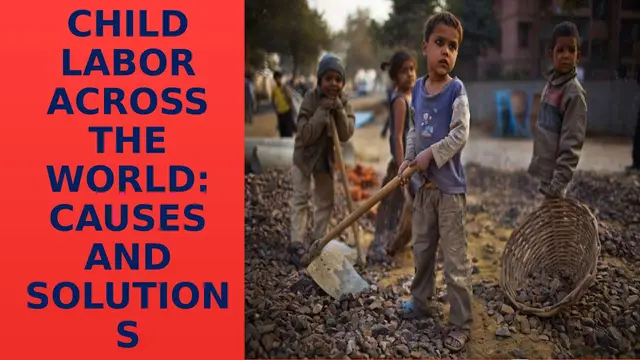
Child labor across the world: Causes and solutions.
PPTXAbout this presentation
Child labor remains a critical issue globally. Discover the root causes and explore effective solutions to eradicate it. #EndChildLabor #GlobalChange
- Category
- Education
- Uploaded
- Format
- PPTX
Transcript
Open full transcript
CHILD LABOR ACROSS THE WORLD: CAUSES AND SOLUTION S Introduction: Child Labor is a Global Problem Child labor remains a persistent global issue, despite significant efforts to eradicate it. Here's a breakdown of the root causes and potential solutions Source: supplyofscience.blogspot.com Causes Poverty: he primary driver of child labor is poverty. Children from poor families are often forced to work to supplement household income, even if it means sacrificing education and risking their health. Lack of Access to Education: Limited access to quality education creates a vicious cycle. Children who aren't in school are more likely to be pushed into the workforce. Source: worldvisionadvocacy.org Cultural Norms: In some cultures, child labor is seen as an acceptable or even necessary part of life. Traditional practices may encourage children to learn skills through work at a young age. Demand for Cheap Labor: Certain industries thrive on cheap labor, creating a market for child workers. This can be seen in agriculture, garment manufacturing, and mining. Armed Conflict and Displacement: Children caught in war zones or refugee situations are particularly vulnerable to exploitation and forced labor. Source: borgenproject.org Physical and Mental Harm: Child labor can expose children to hazardous working conditions, leading to physical injuries, health problems, and psychological trauma. Limited Education: Working long hours takes away from education, hindering a child's future prospects and perpetuating the cycle of poverty. Sourcestopchildlabor.org Children's Rights: The most widely ratified international agreement pertaining to human rights is the Convention on the Rights of the Child (CRC), which was adopted by the United Nations in 1989. Source: studentedge.in Exploitation and Abuse: Child laborers are at risk of exploitation, trafficking, and violence at the hands of employers. Poverty Reduction: Investing in programs that alleviate poverty, such as microloans and social safety nets, can reduce reliance on child labor. Source: freepik.com Education Initiatives: Promoting access to quality, free, and compulsory education is crucial to keep children in school and equip them with skills for better futures. Law Enforcement: Strengthening and enforcing child labor laws can deter businesses from exploiting children. This includes holding employers accountable for Source: violations. eastasiaforum.org International Cooperation: Global collaboration is key to address child labor in supply chains and hold companies accountable for ethical sourcing practices. Community Awareness: Raising awareness about the negative consequences of child labor within communities is essential to shift social norms and encourage reporting of violations. Source: abcnews.go.com International Labour Organization (ILO): The ILO spearheads global efforts to fight child labor through setting international standards, promoting policy changes, and supporting national programs. UNICEF: UNICEF works to protect children's rights, including the right to education and freedom from exploitation. They work with governments and communities to eradicate child labor. NGOs: Numerous NGOs work tirelessly to rescue child laborers, provide Source: studytoday.net education and rehabilitation programs, and advocate for legislative changes. Conclusion: Eradicating child labor is a complex challenge requiring a multifaceted approach. By addressing the root causes, strengthening enforcement mechanisms, and promoting education and community awareness, we can work towards a future where all children can reach their full potential. Source: data.unicef.org
Comments
View comments
Add a comment