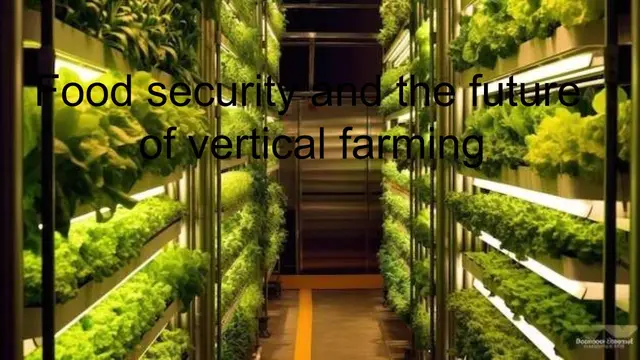
Food Security and the Future of Vertical Farming.
PPTXAbout this presentation
Vertical farming is key to food security in the future! Explore how this innovative approach can sustainably feed a growing population. #FoodSecurity #VerticalFarming #SustainableAgriculture
- Category
- Food & Cooking
- Uploaded
- Format
- PPTX
Transcript
Open full transcript
Food security and the future of vertical farming. Introduction: The production and availability of food are impacted by a number of global issues, including resource scarcity, climate change, and population growth. The practice of vertical farming shows promise in addressing these issues. Source freepik.com. 2 Increased Yields: By maximizing crop production in urban areas, vertical farms can produce high yields in a smaller footprint. Decreased Water Use: Hydroponic and aeroponic farming techniques, which require a lot less water than conventional agricultural practices, are frequently used in vertical farming systems. Source freepik.com. 3 Climate Resilience: By controlling indoor farming conditions, crop yields are less affected by climate change. Source businessinsider.com 4 Decreased Pesticide Use: By managing the growing environment and putting integrated pest management techniques into place, vertical farms can reduce the amount of pesticides they use. Source chaindc.com 5 Local Food Production: By situating vertical farms closer to cities, food miles and transportation expenses can be decreased. Year-Round Production: Because indoor farming enables year-round crop production, a consistent supply of food is guaranteed.. Source 6 futurefoodproduction.com Obstacles and Things to Think About Initial Investment: The infrastructure, technology, and expertise needed to set up a vertical farm are expensive up front. Source freepik.com. 7 Energy Consumption: Vertical farms' controlled environments may require a lot of energy, which raises operating expenses. Source global-imi.com. 8 Scalability: Growing vertical farming operations to fulfill the demand for food on a large scale can be difficult. Technological Advancements: To solve technical issues, cut expenses, and increase efficiency, more research and development is required. Source 9 aircareautomation.com Conclusions: Challenges with food security could be greatly helped by vertical farming, particularly in highly populated urban areas. As costs come down and technology improves, vertical farming might be a more practical and scalable option. To sustainably meet the world's food needs, however, a combination of conventional agriculture and vertical farming will probably be required. Source agritecture.com. 10
Comments
View comments
Add a comment