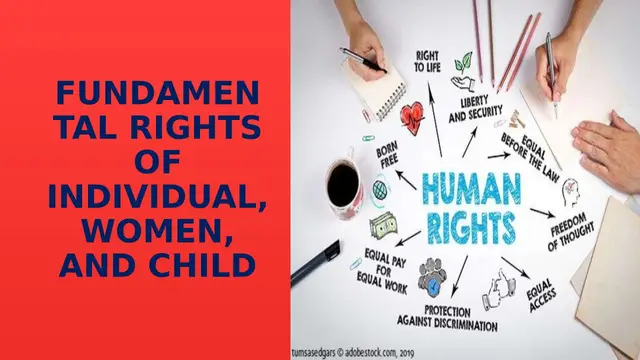
Fundamental Rights of individual, women, and child
PPTXAbout this presentation
Empowering every individual, woman, and child with their fundamental rights Let's stand together for equality, freedom, and justice for all.
- Category
- Motivational
- Uploaded
- Format
- PPTX
Transcript
Open full transcript
FUNDAMEN TAL RIGHTS OF INDIVIDUAL, WOMEN, AND CHILD Introduction: Universally acknowledged principles serve as the cornerstone for the protection of individual rights. These essential liberties that are innate to every human being are outlined in the 1948 Universal Declaration of Human Rights (UDHR), which was adopted by the UN. These privileges consist of following Source: fra.europa.eu Personal Freedoms: Numerous nations possess national constitutions or legal frameworks that expound upon these essential rights and furnish additional safeguards for individuals. Source: dreamstime.com Individual rights: The ability to run for office and vote. the right to be a business owner. Freedom of the press to publish petitions to the government Source: Huffington Post UK Women's Rights: Specific rights for women are frequently addressed by international conventions and national laws in an effort to promote equality and fight discrimination. These could consist of equal compensation for equivalent work the right to a healthy reproductive system Right to be free from discrimination and violence The entitlement to economic opportunities and education Inheritance and property rights Source: dailycsr.com Children's Rights: The most widely ratified international agreement pertaining to human rights is the Convention on the Rights of the Child (CRC), which was adopted by the United Nations in 1989. Source: studentedge.in children's particular needs and rights, such as: the right to life and growth Right to be shielded against violence, exploitation, abuse, and neglect entitlement to education entitlement to a nationality and name Freedom of speech Right to privacy Right to take part in choices that have an impact on them The right to the best possible quality of health Source: slideshre.com The significance of basic rights For a society to be just and equitable, fundamental rights are necessary. They foster human dignity, give people more power, and establish a foundation for peaceful cohabitation. We guarantee that everyone has the chance to realize their full potential and lead satisfying lives by defending these rights. Source: wordatlas.com Universal rights 1: The rights to life, liberty, and personal security are universal human rights. Freedom from cruel, inhuman, or degrading treatment, including torture The entitlement to equality before the law and nondiscrimination Right to be acknowledged as a person before the law everywhere Right to one's own life, liberty, and security Source: youthvillage.co.za emancipation from servitude and slavery Universal human rights: Right to a public, impartial, and independent tribunal hearing Privacy rights Religious, ethical, and mental freedom Freedom of speech and belief Freedom to assemble and associate in peace Possession of property rights freedom of travel inside a nation freedom to depart from any nation, including his own Source: domestika.com Conclusion: Different national laws and international conventions may contain different specific rights. It's wise to refer to reliable sources whenever you have questions about the legal system of a given nation. Source: seaberrydesign.com
Comments
View comments
Add a comment