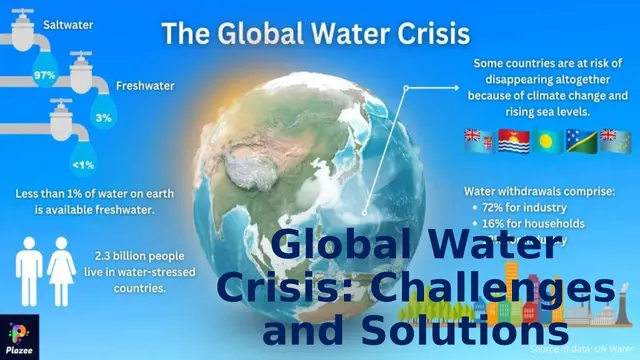
Global Water Crisis: Challenges and Solutions
PPTXAbout this presentation
The global water crisis poses significant challenges. Explore innovative solutions to ensure access to clean water for all. #WaterCrisis #Sustainability
- Category
- Environment & Nature
- Uploaded
- Format
- PPTX
Transcript
Open full transcript
Global Water Crisis: Challenges and Solutions Introduction: The global water crisis is a complex issue with far- reaching implications for societies, economies, and ecosystems. Let's delve into the challenges and explore potential solutions. Source: plozee.com 2 Challenges: Water Scarcity: Many regions face chronic water shortages, exacerbated by factors like climate change, population growth, and inefficient water use. Water Quality: Pollution from industrial, agricultural, and domestic sources contaminates water bodies, impacting human health and ecosystems. Source: netsolwater.com 3 Inequality: Access to safe drinking water and sanitation is unevenly distributed, with disadvantaged communities often bearing the brunt of the crisis. Climate Change: Changing precipitation patterns, rising sea levels, and extreme weather events exacerbate water scarcity and create new challenges. Competition for Water: Agriculture, industry, and domestic use compete for limited water resources, leading to conflicts and unsustainable practices. Source: netsolwater.com 4 Solutions Addressing the global water crisis requires a multi-faceted approach involving governments, organizations, communities, and individuals. Improved Water Management: Implementing efficient water use practices in agriculture, industry, and households can significantly reduce water consumption. Water Conservation: Promoting water-saving technologies and behaviors, such as rainwater harvesting, drip irrigation, and water- efficient appliances. Wastewater Treatment and Reuse: Source: thedailynotable.com 5 Treating wastewater for reuse in agriculture, industry, or even for potable water can augment water supplies. Infrastructure Development: Investing in water infrastructure, including dams, reservoirs, and distribution networks, is crucial for ensuring reliable water supply. Climate Change Mitigation: Reducing greenhouse gas emissions to mitigate climate change is essential for protecting water resources and preventing extreme weather events. Source: freepik.com 6 Infrastructure Development: Investing in water infrastructure, including dams, reservoirs, and distribution networks, is crucial for ensuring reliable water supply. Climate Change Mitigation: Reducing greenhouse gas emissions to mitigate climate change is essential for protecting water resources and preventing extreme weather events. Source: newsd.in 7 Education and Awareness: Raising awareness about the importance of water conservation and sustainable water use is crucial for behavioral change. Innovation: Research and development of new water technologies and solutions are essential for overcoming water challenges. Source: gineersnow.com 8 Case Study examples: Israel: Known for its water scarcity, Israel has developed advanced water management practices, including desalination and wastewater reuse, to ensure water security. Singapore: This city-state has invested heavily in water treatment and recycling, transforming wastewater into a valuable Source: wiredbugs.com 9 resource. Conclusion: Addressing the global water crisis requires a holistic approach that considers the interconnectedness of water, energy, food, and ecosystems. By implementing a combination of these solutions and fostering international cooperation, we can work towards a water-secure future. Source: worldatlas.com 10
Comments
View comments
Add a comment