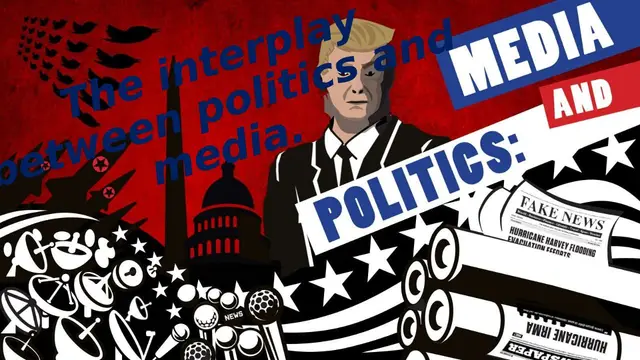
The interplay between politics and media.
PPTXAbout this presentation
Politics and media are deeply intertwined, shaping public opinion and influencing decisions. Explore how this dynamic impacts society. #PoliticsAndMedia #PublicOpinion #MediaInfluence
- Category
- News & Politics
- Uploaded
- Format
- PPTX
Transcript
Open full transcript
lay terp and he i n T it ics en p ol e ia. betw med Introduction: The relationship between politics and media is a complex and symbiotic one, with each influencing the other in significant ways. Source: journalism.unl.edu Media's Influence on Politics: Agenda Setting: Media outlets can shape public discourse by deciding which stories to cover and how much prominence to give them. This can influence the political agenda. Source: politicallycorrects.com Image Building: Politicians rely heavily on media to cultivate a positive public image. Media coverage can make or break political careers. Source: oaklandpostonline.com Opinion Formation: Media can sway public opinion through news framing, commentary, and analysis. This can directly impact election outcomes. Watchdog Role: The media acts as a watchdog, scrutinizing government actions and holding politicians accountable. Source: medium.com Politics' Influence on Media Media Ownership and Control: Governments and political entities often own or influence media outlets, leading to biased coverage. Media Regulation: Governments can impose regulations on media content, affecting the freedom of the press and the flow of information. Source: a-stitch.com Access to Information: Politicians control access to information, which can influence media coverage. Media Bias: Politicians may use media to promote their own agendas and discredit opponents, leading to biased reporting. Source: professions.ng Problems and Issues with False Information and News: Problems and Issues with False Information and News: Due to the ease with which false information can now be disseminated on social media, audiences are finding it more challenging to distinguish between fact and fiction. Media Consolidation: The range of voices and viewpoints may be restricted when media ownership is concentrated in a smaller number of hands Source: easy.peasy.ai Problems and Issues with False Information and News: Polarization: By appealing to particular audiences and promoting preexisting ideas, the media can exacerbate political polarization. Decline in Trust: Sensationalism, bias, and false information are some of the reasons why the public's faith in the media has been damaged. Source: meltwater.com Problems and Issues with False Information and News: Conclusion: The media's and politics' relationship is always changing. It is crucial to support a media environment that is impartial, truthful, and answerable to the public as technology develops and the media landscape shifts. Source: linkedin.com
Comments
View comments
Add a comment